

CMECH B2B: Why Our Website Revamp Doubled Leads

From Logistics Industry Disruptor to
Brand Disruptor: Inside a 360° Rebrand

The Real Secret to Building a Community That Sticks - How DAEBY Korean Cosmetics Built a Real Community in Hong Kong

Why KOL Marketing Is the Go-To Strategy for Skincare Brands — And How DAEBY Skin Used It to Build a Korean Identity in Hong Kong

We Migrated 158 Blogs, Changed the Domain, and Organic Traffic Went Up 9,162%. Here's How
.jpg)
B2B Social Media Doesn't Have to Be Boring: The 6-Pillar Content System Behind Wayfindr's Social Presence
RELATED

SPOTLIGHT
FEB 5, 2026 - Indomie Social Media and Content Production
5 February 2026
INDUSTRY
Food
SCOPE OF WORK
SHARE
CASE
PROJECT DESCRIPTION
Indomie is one of the world's most iconic instant noodle brands, with a global fanbase spanning over 100 countries. In Hong Kong, Indomie has become a beloved staple for students, young professionals, and comfort food lovers alike.


KEY TAKEAWAYS
Indomie Hong Kong's social media went from averaging 3,000 views to hitting 119,000 views on a single post—with only 5,000 followers
We partnered university students directly from campus, leveraging brand partnerships and creative incentives to bring authentic voices into the content
The content shift: from product-only illustrated graphics to real students cooking, eating, and reacting to Indomie
Consistent viral-level results over 8 months, with posts regularly hitting 20K-90K views
Introduction
We've helped Indomie Hong Kong go from 3,000 views to 119,000 views by doing something pretty simple: putting real people at the center of the content.
Read more
Here's a scenario that might sound familiar if you manage social media for an established brand.
You've got a product people know. They've seen it on shelves. Maybe they've tried it once or twice. But when they're standing in a convenience store hungry for a quick meal, your brand isn't the one that comes to mind first.
That was Indomie Hong Kong's situation when they came to us. The instant noodle brand has been around for decades and has fans all over the world. But their Hong Kong social media? It was stuck in a time capsule.
We're talking illustrated graphics. Product shots with zero human element. Captions entirely in Chinese. Giveaway posts that got maybe 20 likes on a good day. The content looked like ads from 2015, and the engagement numbers reflected it—posts were averaging around 3,000 views on an account with 5,000 followers.
Eight months later, our first student-driven video hit 119,000 views. That's not a typo. And it wasn't a fluke—we've consistently hit 20K, 54K, 81K, even 90K views on posts since then.
So what changed? We stopped making content about Indomie and started making content with the people who actually eat it.


What Kind of Content Actually Resonates With Gen Z?
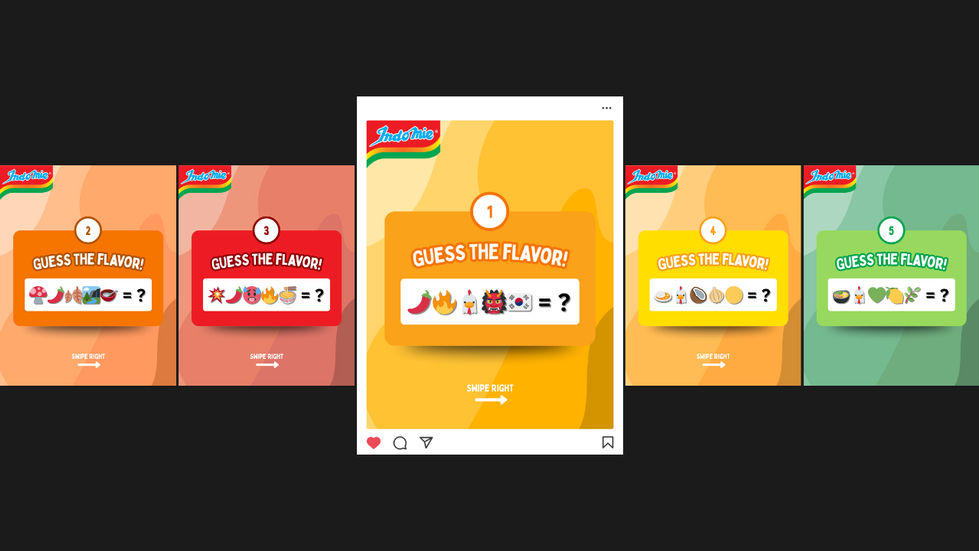
We shifted from polished graphics to real, relatable student moments—and the content themes that performed best were everyday scenarios like dorm cooking, study breaks, and genuine product reactions.




Read more
Let's get specific about what we created and what performed best.
Here's what changed in the content:
Before | After |
Illustrated graphics | Real people in real settings |
Product-only shots | Students cooking, eating, reacting |
Giveaway-focused posts | Story-driven, relatable moments |
"Advertisement" aesthetic | Native social content feel |
And here are the content themes that absolutely crushed it:
And here are the content themes that absolutely crushed it:
One video showed a student cooking Indomie in their dorm, and then people from the same floor started showing up because they could smell it and wanted to ask for a bite.
We worked with a student whose caption was "when you have so much material to study you pull out this move"—and then he goes from his desk to the kitchen to make Indomie.
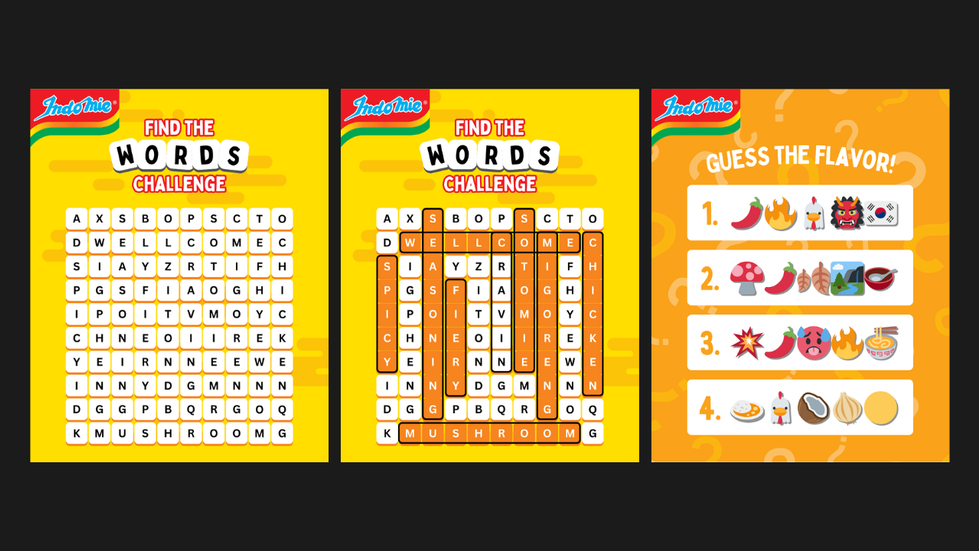
During our campus shoot, we found some Indonesian students and had them taste Indomie blindfolded to guess the flavor—without knowing what they were eating. They all got it right.
We had students try the new Korean spicy flavors and just... react. No script. No direction beyond "tell us what you think." The faces people made, the genuine surprise at the heat level—that's content you can't fake.
What Was Wrong With Indomie's Social Media?
The content felt corporate, lacked human elements, had no English captions, and relied too heavily on giveaways—resulting in posts averaging only 1,000-5,000 views with minimal engagement.
Read more
Before we dive into what we did, let's talk about where things stood.
Indomie Hong Kong's social media had a few core problems that kept it from connecting with younger audiences.
The content felt corporate, not human. Every post was either an illustrated graphic or a product shot. No real people. No real moments. Just noodles floating in designed layouts with brand colors. It looked nice enough, but it didn't make anyone feel anything.
There was no English content. Hong Kong has a huge English-speaking population—young professionals, international students, expats. The Chinese-only captions meant an entire segment of potential fans couldn't engage with the content even if they wanted to.
The engagement strategy was stuck on giveaways. Giveaway challenges can work, but when that's your entire content strategy, you're not building a community. You're just renting attention from people who want free stuff.
The content looked like what brands think young people want, not what young people actually watch. There's a massive difference between "polished brand content that features young people" and "content that feels native to what Gen Z actually scrolls through." Indomie's feed fell into the first category.
The result? Posts averaging 1,000 to 5,000 views. Around 20 likes. Minimal shares. The brand awareness was there—people knew Indomie existed—but there was no emotional connection. No reason to choose Indomie over the ten other instant noodle options at 7-Eleven.
How Do You Make an Established Brand Feel Young Again?
Gen Z wants content that feels like what they already watch from friends—real people, unpolished moments, relatable scenarios. We built our strategy around putting real humans in the content, tapping into universal student moments, and finding authentic creators resourcefully.
Read more
Here's the insight that shaped our entire strategy: Gen Z doesn't want to watch ads. They want content that feels like the stuff they're already watching from their friends. That means real people in real situations. Unpolished moments. Relatable scenarios. The kind of content that makes you think "oh my god, that's literally me" instead of "oh, that's an ad." So we built our approach around three core ideas.
First, put real humans in the content. This sounds obvious, but you'd be surprised how many brands resist it. We replaced the illustrated graphics and product shots with actual students and youth cooking, eating, and reacting to Indomie. Real faces. Real kitchens. Real reactions.
Second, tap into universal student moments. What are the experiences that every student relates to? Late-night study sessions that turn into snack breaks. The smell of someone cooking instant noodles in a dorm that makes everyone on the floor curious. That specific exhaustion when you've been studying for hours and you just need something warm and easy. We built content around these moments.
Third, find creators resourcefully. A traditional approach would be to pay influencers or book professional talent. We went a different route—we went directly to universities and found students who genuinely love instant noodles.
How Did We Find Student Content Creators?
We walked onto a nearby university campus and pitched students directly—offering them a chance to try exclusive new Korean flavors before anyone else. Around 10 students said yes immediately, genuinely excited about the limited-edition products.
Read more
This is where things got interesting.
We found a university near our office that was open to visitors. Then we literally walked onto campus with a simple pitch: want to try Indomie's new exclusive Korean flavors and be filmed giving your honest reactions?
That's it. No complicated casting process. No talent agency. Just a straightforward offer.
Around 10 students said yes on the spot—and their enthusiasm was genuine. These were brand-new, limited-edition Korean flavors that hadn't been widely released yet, and everyone wanted to be among the first to try them. The exclusivity of getting early access to something new made the opportunity irresistible.
Why did this work? A few reasons.
Students are way more comfortable on camera than older generations. They've grown up making TikToks, posting Stories, filming content for their own social media. Being in front of a camera isn't weird or intimidating for them—it's normal.
Free food plus a fun experience is an easy yes. We offered Indomie products and branded merchandise (t-shirts, tote bags) as a thank-you gift. No talent fees, but a genuine exchange of value.
Authentic enthusiasm beats paid performance every time. When someone's being paid to act excited about a product, you can usually tell. When someone's genuinely stoked to try new flavors and get free noodles, that energy comes through on camera.
The whole shoot took less than three hours. We captured reaction videos, "guess the flavor" challenges, spicy noodle challenges—multiple pieces of content in one session.
We did brief the students on some ground rules (don't mention competitor brands, for example) but we encouraged real reactions. The goal was to create an environment where they felt comfortable being themselves, not performing.
Did the Student Content Strategy Actually Work?
Average views jumped from 1,000-5,000 to 20,000-90,000+, with the peak video hitting 119,000 views on an account with only 5,000 followers. Indomie said these results had never happened before—even with paid media.
Read more
Let's look at the numbers.

That first student video hitting 119,000 views on an account with only 5,000 followers was the moment everyone realized something had fundamentally shifted. But what's more impressive is that it wasn't a one-time thing. We maintained viral-level performance month after month. Posts regularly hit 20K, 54K, 81K, 90K views.
The content that performed best was consistently the raw, authentic, relatable stuff. Not the polished graphics. Not the product shots. The videos where real students were doing real things with Indomie.
We also uncovered an interesting insight through content performance: posts about buying Indomie on HKTV Mall (an e-commerce platform) did surprisingly well. It turned out a lot of people didn't realize they could order Indomie online. The content revealed a gap in consumer knowledge that the brand could address.
How did Indomie respond to all this?
They told us these kinds of results had never happened before—even when they were putting paid media budget behind their posts. The trust increased significantly. When your organic content outperforms boosted posts, it validates the entire strategy.
What Can Other Brands Learn From This?
Authenticity beats polish, your audience can be your creators, meet them where they are, invest in process not just creativity, and content performance reveals business insights.
Read more
Whether you're managing social media for an established brand or building one from scratch, here are the lessons that matter.
Authenticity outperforms polish. Our "messier," more human content consistently beat the designed graphics. Every time. If you're spending more time making your content look like an ad, you're probably going in the wrong direction. Stop making advertisements. Start making content people actually want to watch.
Your audience can be your content creators. Students, customers, fans—the people who genuinely love your product will create better content than actors or models who don't have a real connection to what they're promoting. Real enthusiasm is impossible to fake, and audiences can tell the difference.
Meet your audience where they are—literally. We walked onto a campus and just asked students if they wanted to participate. Sometimes the most effective strategy is the simplest one. Don't overcomplicate the process. Go to where your target audience already is.
Invest in process, not just creativity. The behind-the-scenes work—brand guideline study, detailed shoot rundowns, multiple QC rounds, bilingual caption workflows—is what allows creativity to actually reach the audience. Great ideas die in messy execution. Build systems that protect quality at every step.
Content performance reveals business insights. The surprising success of our HKTV Mall posts showed us that people didn't know they could buy Indomie online. That's not just a content win—that's a discovery about consumer behavior that has implications beyond social media.
Ready to Make Your Brand Relevant to Younger Audiences?
If your social media feels stuck—if you're getting views but no engagement, or if your content looks great but doesn't connect—we can help.
At THE LABELESS, we specialize in making brands feel fresh, relevant, and human. We've helped Indomie Hong Kong go from 3,000 views to 119,000 views by doing something pretty simple: putting real people at the center of the content.
Whether you're a legacy brand looking to rejuvenate your image or a growing business that needs creative solutions, let's talk about what's possible.
SHARE
CASE
Recommended services

Based in Seoul & Hong Kong, LABELESS utilizes the status of Asia’s business hub with a Hong Kong-based marketing team, and a design team based in Korea. We believe creative design work and performance digital marketing have to go hand in hand to achieve the best performance.
Terms & Condition
LABELESS
© 2024 All rights reserved.
